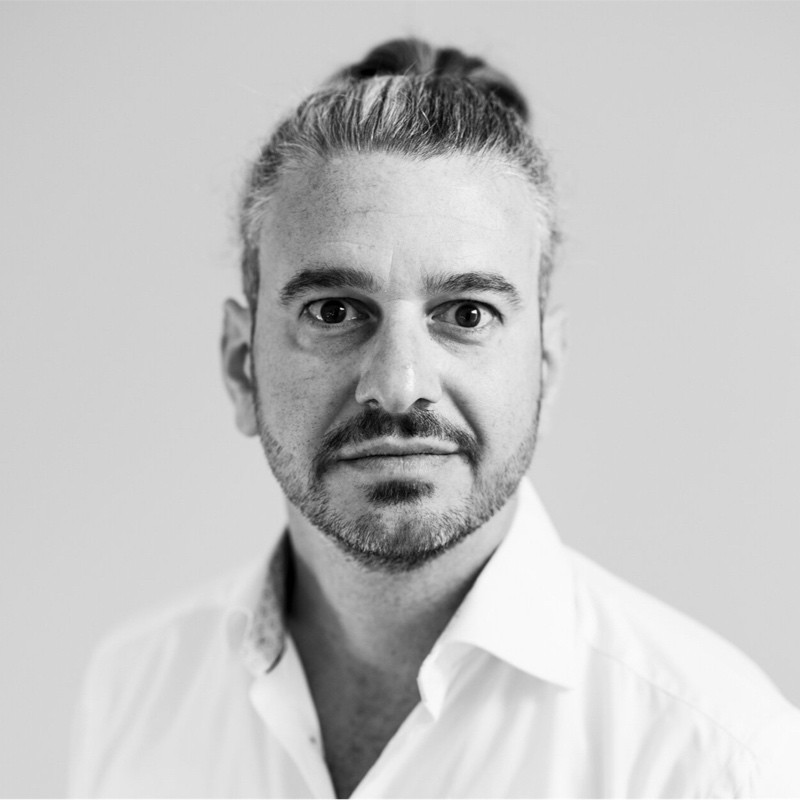
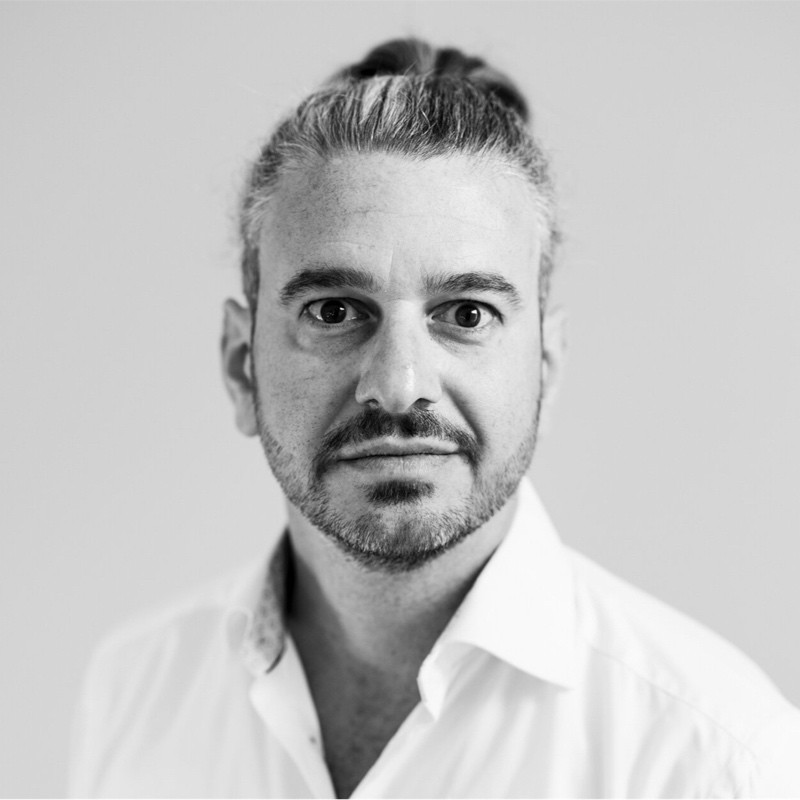
 Donato Blandolino
Transformation in manufacturing companies rarely fails because of the concept. It fails because change has to be implemented alongside series production that must keep running every day. Anyone who underestimates this plans an initiative that adds up on paper but does not work on the shop floor.
This page provides an overview of the five situations that trigger operational transformation, the typical causes of failure, the stages of an assignment and the question of when interim management is a better approach than consultancy.
What does transformation in manufacturing mean?
Not a programme, but a trigger. In practice, it is almost always driven by one of five situations.
A site is losing money. Restructuring and turnaround. There is rarely a single cause; capacity utilisation, scrap, set-up losses and a product mix whose profitability no one has ever calculated usually overlap.
Production is being relocated or established from scratch. Plant relocation, plant set-up, a second site. Two plants have to operate simultaneously for months while one is being dismantled and the other is not yet capable of producing anything.
A product enters series production. Industrialisation and ramp-up. The transition from development to manufacturing is the most expensive phase in the product life cycle if it goes wrong.
Processes can no longer support growth. Material flow, production planning, supply chain. Processes that worked at half the volume break down at full volume.
A leadership position is vacant. Interim management to bridge the gap, often at precisely the moments when a plant can least afford to be without that leadership.
These situations differ in their technical details. They barely differ in the reasons why they fail.
The five situations at a glance
| Situation | Typical triggers | Critical factor | Approximate duration |
|---|---|---|---|
| Restructuring and turnaround | Site operating at a loss, margins collapsing, customer threatening to leave | Transparency about which part actually makes money | 12 to 24 months |
| Plant relocation | Cost structure, site consolidation, proximity to the customer | Time required for requalification and customer approvals | 12 to 24 months |
| Plant set-up and industrialisation | New product, new region, capacity expansion | Whether the supply chain and qualification can support the ramp-up curve | 9 to 18 months |
| Process optimisation | Growth overwhelms existing processes, inventories rise | Set-up times, material flow, planning quality | 3 to 9 months |
| Interim cover for a leadership role | Unexpected absence, vacancy during a critical phase | Speed of taking over, acceptance within the team | 6 to 12 months |
These timeframes are based on experience from our assignments and vary according to the degree of vertical integration, regulatory requirements and the number of sites affected.
Why transformation projects fail
Because day-to-day operations always win. Three patterns emerge regardless of industry or size.
Change is handled on the side. The same people expected to drive the project are keeping series production running. Whenever there is a conflict, the customer call-off takes priority, not the project plan. This is the right commercial decision, yet it still brings one in two initiatives to a standstill.
Assumptions are treated as facts. Almost every failed project contains two or three assumptions that were never identified as such. Can the supply chain support the ramp-up curve, or is there merely a commitment? Is the team qualified, or is that only in the plan?
Responsibility is divided. If no named individual is accountable for the overall result, each department optimises its own part. Friction moves up the hierarchy and remains unresolved there.
There is also a fourth point that is mentioned less often: hardly anyone has learnt anything from the last failed attempt. Companies document results but do not analyse decisions. That is why every new project begins with the same questions and the same mistakes.
What an honest project review looks like in practice:
Recognising early warning signs
Three signs indicate trouble long before it appears in the report.
| Signal | What lies behind it | What to do |
|---|---|---|
| Status jumps from green to red without amber | Amber is seen as a weakness, problems are only reported once they have escalated | Actively encourage amber reporting and do not penalise it, with senior leaders setting the example |
| Meetings revolve around escalations rather than progress | The project is no longer being managed, only its consequences | Address the causes of recurring escalations rather than resolving them individually |
| The question of who decides is answered with a department rather than a name | Divided responsibility, friction moves up the hierarchy and remains unresolved | Assign a named person responsible for each work package |
Stages of an assignment
In four steps, with the first being the most important.
1. Understand what is actually happening
We start on the shop floor, not in the meeting room. Follow a part on foot, count handling steps and metres travelled, speak to shift supervisors and machine setters. This regularly uncovers the unofficial version of the last attempt, which is more valuable than any final documentation.
2. Test assumptions, not deadlines
Before planning begins, facts are separated from hopes. This distinction determines the course of the project more than any management tool.
3. Implement with operational responsibility
We take on leadership for a defined period, make decisions in day-to-day operations and are accountable for them. We do not produce concepts for someone else to implement.
4. Embed
An assignment is complete when the organisation continues to operate without us. Not when the action list has been ticked off.
Results from practice
Indicative figures from our assignments in recent years, anonymised by industry and region.
| Industry and region | Situation | Outcome |
|---|---|---|
| Defence technology, Germany and the Netherlands | Turnaround and ramp-up across multiple sites | Scaling vehicle production from a few units per month to up to 1,500 per year, during ongoing operations without any production interruption |
| Rail technology, Switzerland | Industrialisation and restructuring | Transition from make-to-stock to make-to-order production, establishment of capacity planning, introduction of quality inspection in production |
| Watchmaking industry, Switzerland and Mauritius | Operational leadership and cross-plant coordination | Deputy manufacturing leadership with around 130 employees, introduction of paperless manufacturing and a visual planning board |
| Electronics manufacturing, Europe and Asia | Multi-year programmes on order throughput and planning | Redesign of the order management process from order receipt to delivery, reorganisation of production planning across six countries |
| Automotive supplier, Germany | Production planning and material flow | Optimisation of physical material flow and planning logic, embedding the changes through team training |
Systems play a role in this, but a supporting one. If a process does not work on the shop floor, it will not work in the system either. Conversely, even the best shop floor is of no use if the planning behind it is configured incorrectly. The point is to master both together, not to be particularly good at just one.
Interim management or consultancy?
Manufacturing companies rarely lack expertise. They lack capacity. The people who could drive a transformation initiative are simultaneously keeping series production running, preparing for the next audit and resolving this morning’s disruption. An additional concept does not help them. Additional leadership capacity does.
| Traditional consultancy | Interim Management | |
|---|---|---|
| Outcome | Analysis, concept, recommendation | Change implemented in operations |
| Responsibility | For the recommendation | For the operational result |
| Role in the company | External advisory role | Temporary leadership role within line management |
| Presence | Workshops, steering committee | Shop floor, shift, day-to-day operations |
| End of the assignment | Handover of the concept | When the organisation operates reliably without us |
In critical programmes, we have regularly taken over from leading consultancies, not out of arrogance, but because operational integration and consistency from top to bottom were missing.
We ourselves started at the operational level. Goods receipt, logistics, production planning, plant management. This path still shapes where we look first today.
Competence is the prerequisite, not the differentiator. Whether a team follows depends on the personalities of those leading it. Personality First.
Industries and functions
Core industries with their own page:
- Medical technology and pharmaceuticals: operations subject to documentation requirements, validation, small batches
- Automotive and suppliers: series production ramp-up, call-off fluctuations, margin pressure
- Aerospace, Defence and unmanned systems
- Industrial Machinery and components
- Railway technology
- Semiconductors, photovoltaics and electronics
- Renewable energy and hydrogen
Services with their own page:
Functions we fill: plant and production management, supply chain and logistics, production planning and work preparation, programme and project management, operations at executive management level.
Frequently asked questions
When is an interim manager worthwhile in manufacturing?
When an initiative needs additional leadership capacity that is not available internally, and when someone needs to take responsibility for implementation rather than just a recommendation. Typical situations include setting up a plant, relocation, the start of series production, restructuring or the loss of someone in a key role.
How long does a transformation assignment last?
That depends on the situation. Focused process optimisation often delivers results within three to nine months, while a turnaround or relocation generally takes one to two years. What matters is not the duration, but whether the organisation continues to operate reliably afterwards without external support.
What distinguishes interim management from management consultancy?
Responsibility. Consultants analyse and recommend; implementation remains with the client. Interim management takes on a temporary leadership role and implements changes directly, including day-to-day operational decisions and team leadership.
How quickly can an assignment start?
Usually within a few weeks. In urgent situations, such as the loss of someone in a key role or escalating production ramp-up problems, it can start sooner.
Which countries do we work in?
Our focus is on the DACH region, with project experience in other European countries, the Middle East and Asia. Our headquarters are in Switzerland, with an additional office in Dubai.
Do we also work with medium-sized companies?
Yes. The operational patterns are the same as in large corporations, and the impact is often visible sooner because decision-making processes are shorter.
How much does an interim assignment cost?
The daily rate depends on the role, duration and scope of responsibility. More important than the rate is the question of what a delayed production ramp-up or another year of losses costs. We clarify the parameters in an initial discussion before preparing a proposal.
About the author
Donato Blandolino is the founder and managing director of SMART iNTERIM Management GmbH. His background is in hands-on operations, from goods receiving and logistics through production planning to plant management, and he has been responsible for transformation and turnaround programmes at manufacturing companies in Europe, the Middle East and Asia for over a decade.
About SMART iNTERIM
SMART iNTERIM Management supports manufacturing companies through operational transformation: restructuring, turnaround, plant set-up, plant relocation, industrialisation and process optimisation. We come from hands-on practice, not from a distance, and take operational responsibility rather than simply making recommendations. Headquartered in Switzerland, with a branch in Dubai.