 Donato Blandolino
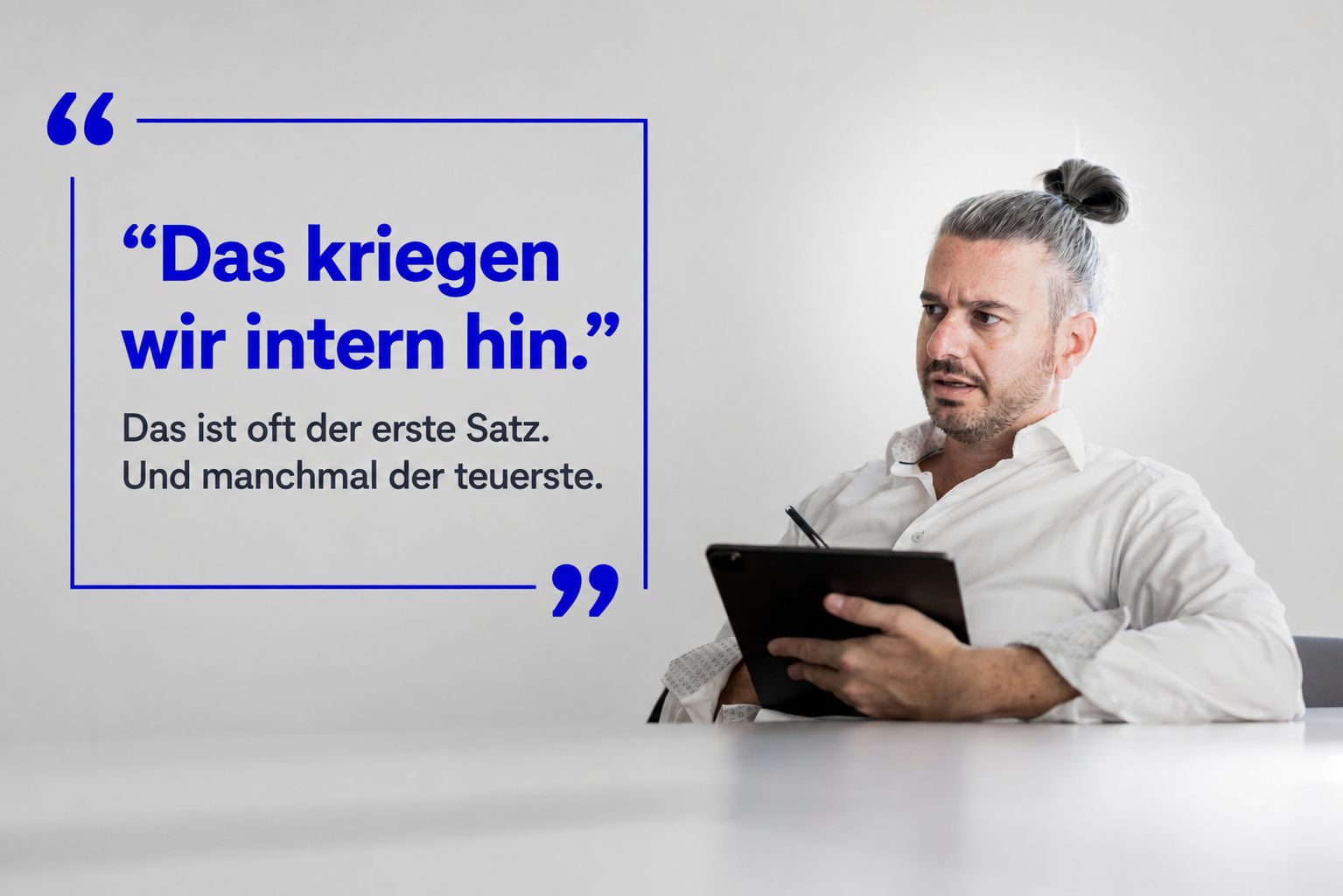
“We can handle this internally.” That is often the first sentence. And sometimes the most expensive. Not because internal teams are poor, but because anyone who works within the same system every day eventually stops seeing it.
“We can handle this internally.” That is often the first sentence. And sometimes the most expensive. Not because internal teams are poor, quite the opposite. But because anyone who works within the same system every day eventually stops seeing it.
In this article, we at SMART iNTERIM explain how organisational blindness develops, why it is so dangerous when things are stuck, and why the solution lies not in the question “internal or external”, but in the combination of a fresh perspective and hands-on operational expertise.
What is organisational blindness and how does it develop?
Organisational blindness describes a state in which people no longer notice problems in their own working environment because they have become part of the daily routine. It stems not from incompetence, but from routine. And that is precisely what makes it so insidious.
Anyone who has walked through the same factory hall for years no longer hears the hum of that one machine running for too long. No longer sees the pile that has been waiting in the same place for months. Accepts as normal a loop that should not exist in the first place. That is not a weakness, it is human nature. The brain filters out the familiar to conserve capacity.
When things are stuck, habit is therefore the most dangerous state of all. What once began as an exception eventually becomes part of the furniture, and nobody questions it any more.
Why internal teams often no longer see the problem
It is a common misconception to equate organisational blindness with a lack of competence. The opposite is true. Experienced, committed teams are particularly affected because they are deeply embedded in the system and keep it running every day.
That very closeness is the reason. Anyone who operates a system every day stops questioning it. The questions that nobody asks internally any more fall silent not out of disinterest, but because the answer is supposedly already settled. “That is how we have always done it” is rarely malicious, but almost always a warning sign.
The value of an outside perspective
This is precisely where the value of someone coming in from outside lies. Not because they know better. But because they still see the things that have become invisible to everyone else. Because they ask the questions that nobody asks internally any more.
An outside perspective brings not superior intelligence, but something far more valuable when things are stuck: a fresh pair of eyes. It sees the waiting pile, the excessively long cycle time and the unnecessary loop for what they are again: problems, not part of the furniture.
Why distance alone is not enough
But, and this is crucial: distance alone is not enough. A consultant who looks in from outside, writes a slide and leaves again changes nothing. An outside perspective exposes the problem, but exposing it does not mean solving it.
A fresh perspective and hands-on operational expertise: only the combination makes the difference. Through practical involvement, not from a distance.
It takes someone who gets involved. Who goes onto the shop floor, works alongside the team, takes responsibility and stays until things are running. This is also the clear dividing line between traditional consultancy and operational interim management.
Internal or external? The wrong question
The question, then, is not whether a company needs internal or external leadership. Internal teams are indispensable: they know the product, the people and the history. The real question is different: at the crucial moment, is someone there who can still see the problem that has long since become part of the furniture for everyone else?
It is not about either-or, but about complementing one another. An external professional with a fresh perspective and strong operational delivery skills does not replace the internal team; they enable it to see and solve again what had disappeared into routine.
How SMART iNTERIM combines a fresh perspective with hands-on operational expertise
At SMART iNTERIM, we bring precisely this combination. Our interim managers have worked their way up from the shop floor: they worked in production and logistics before managing, restructuring and relocating plants. They see the things that have become routine internally, and they do not stop at analysis.
We go onto the shop floor, work with the team, take responsibility and stay until things are running. A fresh perspective reveals problems; hands-on operational expertise delivers change. Through practical involvement, not from a distance. This turns an outside perspective into lasting change, rather than a slide deck.
Frequently asked questions about organisational blindness and external support
What does organisational blindness mean?
Organisational blindness is a state in which problems in one's own working environment are no longer noticed because they have become part of the daily routine. It stems from routine, not incompetence.
Why are experienced teams particularly affected by organisational blindness?
Because closeness and routine dull perception. Anyone who operates a system every day and keeps it running stops questioning it. This is a human mechanism, not a question of competence.
Why is an external consultant alone not enough?
Because distance makes the problem visible, but does not solve it. An outside perspective that merely analyses and leaves behind a presentation changes nothing. It takes someone who goes onto the shop floor, takes responsibility and supports implementation.
What is the difference between consultancy and interim management?
Consultancy looks at a problem from outside and hands over recommendations. Interim management gets involved, works hands-on in operations, takes responsibility and stays until the change takes effect. Only the combination of a fresh perspective and hands-on operational expertise produces results.
Does a company need internal or external leadership?
That is a false choice. Internal teams are indispensable. What matters is whether, at the right moment, someone is there who can still see the problem that has become part of the furniture for everyone else, and who solves it together with the team.
About SMART iNTERIM
SMART iNTERIM Management stands for operational transformation and interim management in manufacturing companies, with a focus on restructuring, plant setup, plant relocation and process optimisation. We combine a fresh outside perspective with hands-on operational expertise: we see what has become routine internally and implement change directly on the shop floor. Through practical involvement, not from a distance. Our principle: competence is the prerequisite, personality makes the difference.