SMART iNTERIM / SAP & Operations
Advanced Return Management (ARM)
Your returned goods are back. Why is the process still far from complete?
The goods are back at the company. But the returns process is far from over.
Have your returns processes analysed01 / The Starting Point
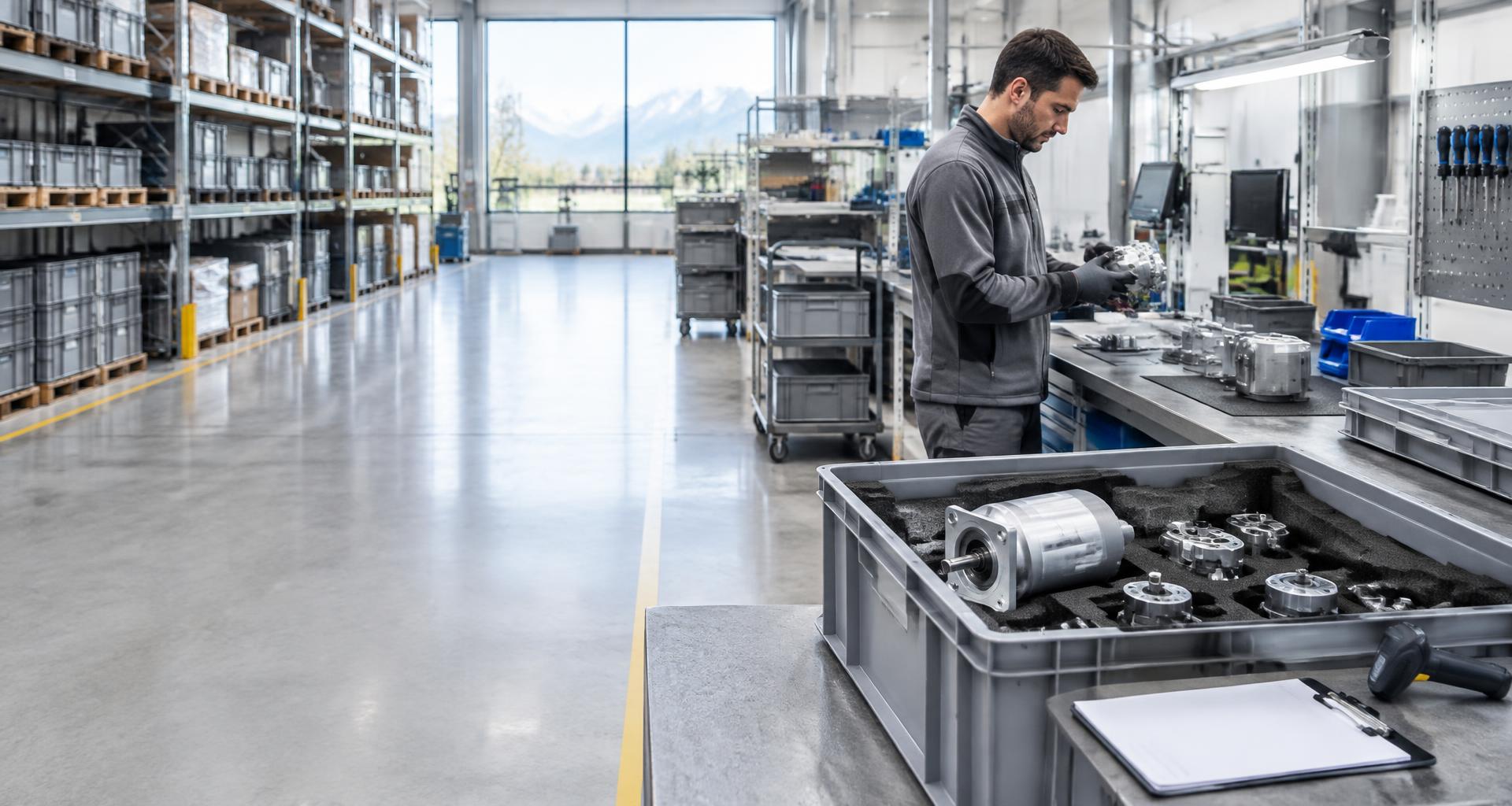
Physically returned.
Operationally still open.
What appears to be physically complete often still creates considerable work in logistics, quality assurance, accounting and management accounting.
Returns must be inspected, assessed, linked to the original transaction, posted and, where appropriate, credited. At the same time, all departments involved must be able to access the same information.
Without this end-to-end integration, delays, coordination problems and financial risks arise.
SMART iNTERIM helps manufacturing companies analyse their returns processes as a whole, map them accurately in their systems and deliver lasting operational improvements.
02 / Interfaces Instead of Silos
When a return becomes a problem for several departments.
A returns process is rarely just a logistics issue. The real complexity arises where different departments, systems and responsibilities meet.
Goods returned. Process still open.
Returns have physically arrived, but have not yet been fully processed in the system.
Credit notes pending
Credit notes are delayed because information or approvals are missing.
Inconsistent data
Logistics, quality assurance and finance work with inconsistent data.
No clear link
Returns cannot be unambiguously linked to the original deliveries or transactions.
Manual workarounds
Manual postings and Excel spreadsheets replace end-to-end processes.
Responsibility remains unclear
Responsibilities across the departments involved are not clearly defined.
The result: what should be a standardised business process develops into a chain of manual coordination tasks. And the higher the volume of returns, the greater the impact.
03 / Advanced Return Management
More than the technical processing of a return.
SAP Advanced Return Management (ARM) enables companies to map complex returns processes in a structured, integrated way.
- 01
Intake
Clarify the problem and decide whether a return shipment is needed at all.
- 02
Inspection & Assessment
Establish the condition and determine further processing.
- 03
Downstream processes
Coordinate logistics, approvals and subsequent steps.
- 04
Financial Completion
Complete postings, refunds and credit notes.
What ARM covers
- Recording and managing customer returns
- Inspecting and assessing returned goods
- Defining subsequent processing steps
- Integrating logistics and follow-on processes
- Processing refunds and credit notes
- Returns status traceability
Technical functionality alone, however, is not what determines success.
A functioning returns process requires clearly defined responsibilities, coordinated business processes and process mapping in SAP that reflects actual operational requirements.
This interface between business and IT is precisely where SMART iNTERIM works.
04 / The process at a glance
One return. Several decisions. One end-to-end process.
From goods receipt through the quality decision to the credit note: we connect departments, process logic and SAP.
Intake: what is the problem?
It starts with the complaint, not the goods. This is where the first decision is made about which path the case takes.
Path A: direct acceptance
The complaint is accepted without a return shipment. The customer receives a credit note or a replacement.
Path B: return shipment and inspection
The goods come back and are inspected and assessed. Only then is the follow-up path decided.
After inspection: which follow-up path?
Replacement delivery
The customer receives new goods.
Internal repair
Rework in your own plant.
External repair
Repair by a partner.
Forwarding
Shipment to a sub-supplier or service provider.
Other site
Shipment to another plant or warehouse.
Restocking
Goods are usable and go back into stock.
Scrapping
No longer usable, disposed of in a controlled way.
Rejection
Complaint unjustified, goods go back to the customer.
Not every return goes through every step. Actual processes depend on SAP version, customizing and return scenario.
Step 3Closure: departments connected, not isolated
- 01
Logistics
Goods receipt and stock
- 02
Quality
Findings and release
- 03
Planning
Follow-up path and control
- 04
Finance
Posting and credit note
Returns are non-valuated.
The returned goods still belong to the customer. That is why the subsequent document flow is also non-valuated until a decision is made. Mapping this wrongly in the system means posting stock and values the company does not own.
A concrete example
One faulty control unit, four departments.
Simplified, typical scenario from practice.
- 01
Complaint
A machine builder receives a customer complaint: a control unit fails after a few weeks.
- 02
Intake
Customer service reviews the case. Instead of issuing a credit right away, a return shipment is requested because the fault is unclear.
- 03
Inspection
Quality finds a defect in a purchased component. Decision: external repair at the sub-supplier, while the customer receives a replacement in advance.
- 04
Closure
The repaired unit returns to stock and the sub-supplier is charged. Every step is traceable in the same transaction instead of five Excel lists.
ARM Process Compass
A compact guide with process flow, decision paths, responsibilities and typical system breaks. We are happy to send it to you.
Request the ARM Process CompassNot to be confused with returnable assets: load carriers in a cycle follow different logic. To returnable asset management
05 / Responsibility for the whole
Why returns processes often fail to work end to end.
In many companies, individual process steps are optimised separately.
Logistics focuses on the physical flow of goods. Quality assurance assesses the condition of returned products. Finance needs correct postings and credit notes.
Each department fulfils its role.
But who is responsible for the entire process?
Without end-to-end management, interface problems arise that cannot be resolved through additional software functionality alone.
That is why we look at returns processes not in isolation, but across the entire value chain. From receipt of the return to financial completion.
06 / From analysis to implementation
How SMART iNTERIM helps optimise your returns processes.
Understand processes and identify weaknesses
We analyse existing returns processes, system landscapes and responsibilities. We examine both operational processing and the effects on related business areas.
Develop end-to-end processes
Together with the business departments, we define clear workflows, decision-making processes and responsibilities. The aim is a returns process that works across departmental boundaries.
Connect SAP with operational reality
Our specialists support the functional and technical implementation of the defined processes, taking the existing SAP system landscape into account.
Support implementation and stabilise processes
We support the operational rollout, work alongside the teams involved and ensure that new workflows become embedded in day-to-day operations.
07 / Free returns check in planning
How well does your returns management really work?
The ARM Readiness Check
The planned check is intended to help you identify within a few minutes where your returns processes already work well and where operational or system-related weaknesses exist.
It is intended to provide an initial assessment of your process maturity, with specific starting points for improvements.
In development. The interactive check is not yet available.
Register your interest in the free checkThese areas are the focus
- 01Process transparency and traceability
- 02Integration between logistics and finance
- 03Process mapping in SAP and automation
- 04Responsibilities and approvals
- 05Processing times and sources of error
08 / Let’s talk about it
Your returns processes should not create more work than necessary.
If returns regularly trigger manual coordination, credit notes are delayed or different departments work with conflicting information, it is worth looking at the process as a whole.
SMART iNTERIM combines operational experience, process expertise and SAP expertise.
Not just to identify opportunities for improvement. But to establish processes that work.
Discuss returns management